marks a new chapter in Penang’s transit journey, bringing efficient and reliable transportation closer to home. As work progresses, every step is geared towards creating a seamless and accessible network for all.
Key Construction Activities for the LRT Mutiara Line
Technical Information
- Land Viaduct Gateway
- Sea Crossing Bridge
- ET High Level Specification
- Station
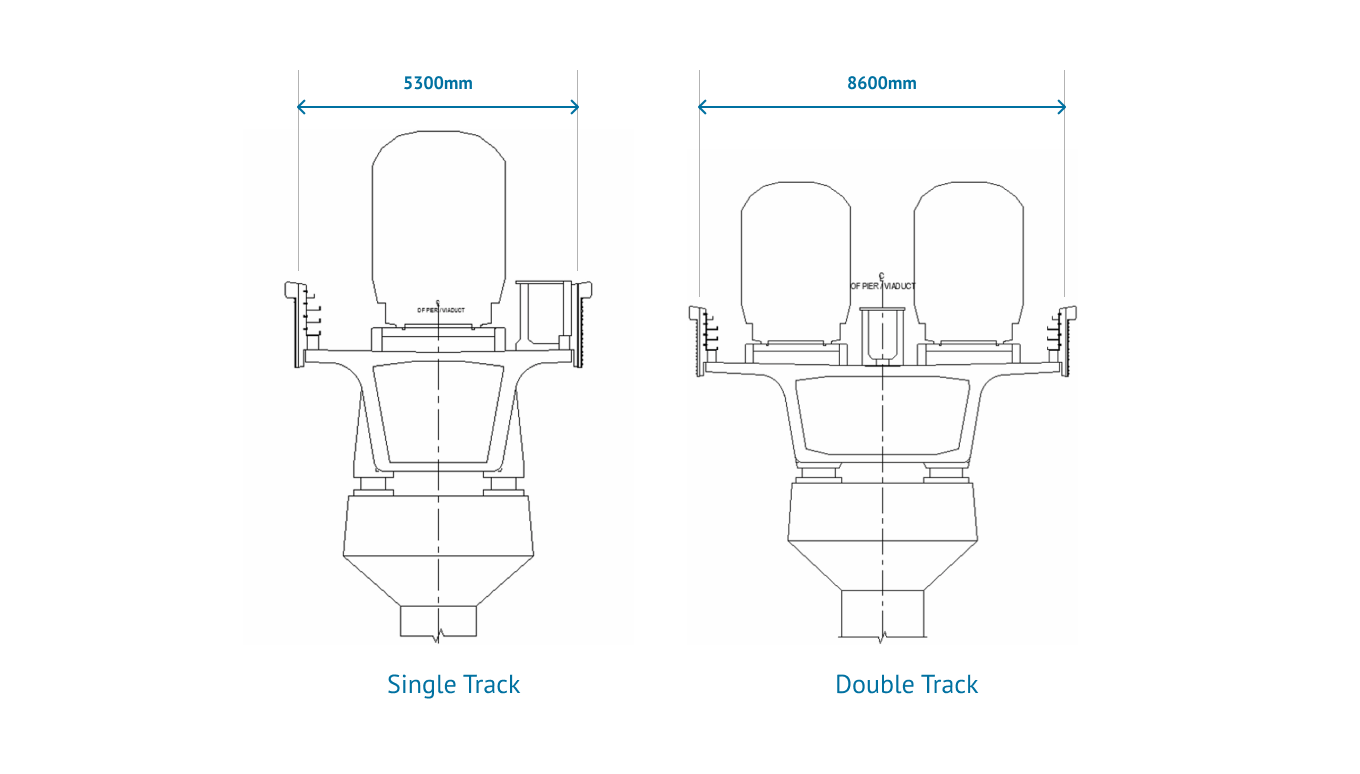
The typical cross section for single and double track segmental box girder viaduct as shown below.
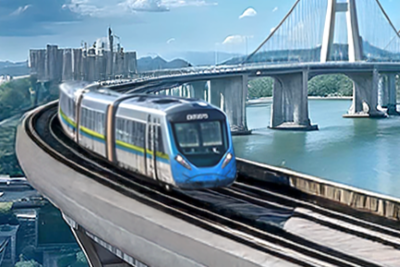
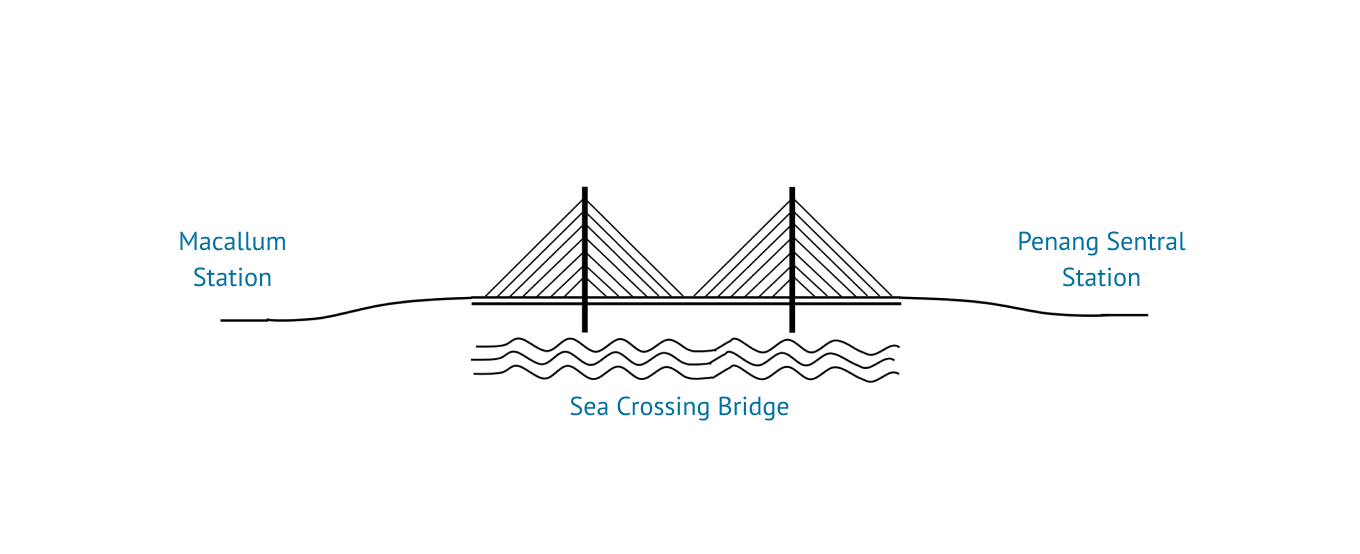
The LRT Mutiara Line introduces the northern region’s first sea-crossing bridge for trains, linking Macallum Station on the island to Penang Sentral on the mainland. Built with passenger safety in mind, the bridge includes an emergency walkway to ensure a safe exit in case of any unexpected situations.
Electric Train (ET) High Level Specification
Parameter
Specification
Technology
Low to Medium Capacity LRT
Capacity
Minimum 405 Pax at AW3
Electrification
750V DC with option to propose full battery system
Max. Speed
70km/h (Operation), 80km/h (Design)
Alignment Flexibility
Turning Radius: 45m (Mainline), 40m (Depot)
Vertical Gradient: 6%, Hog & Sag: 800m
Material
Aluminium Alloy
Train Control
GoA3 with attendant onboard during initial operation years
Dimension
Length: <70m
Width: 2.65m
ET Height: <3.8m
Floor-to-Track Height: <1.1m
Weight
Maximum Axle Load: 13T
Maximum Weight: 156T
Safety Features
Passenger Emergency Communication Unit (PECU)
CCTV in the passenger compartment and exterior
Emergency lighting and Ventilation for 60 minutes
30 minutes fire barrier.
Impact resistance according to EN 15227 standard
System Capacity
2031–2040: 6,045 PPHPD
2041–2050: 9,720 PPHPD
2051–2060: 12,150 PHPD
Travel Time (estimated)
Permatang Damar Laut (S02) to KOMTAR (S20): 40 minutes
Permatang Damar Laut (S02) to Penang Sentral (S31): 45 minutes
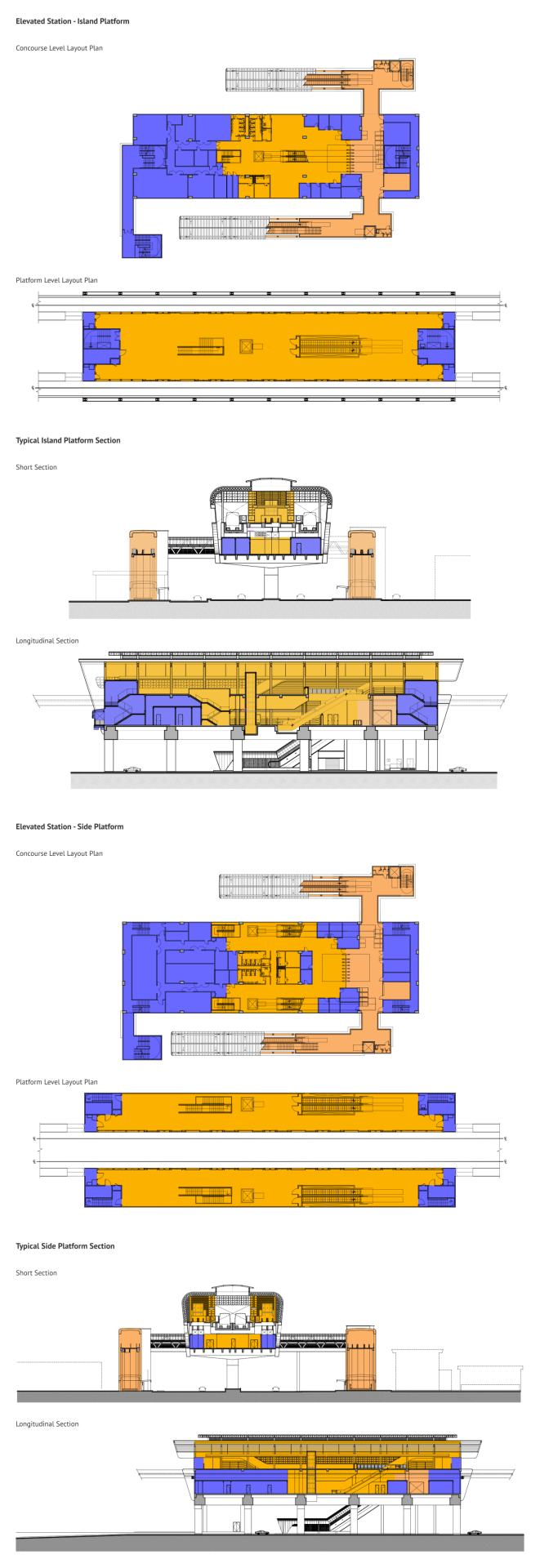
• All elevated stations are either side platform or island platform.
• All stations will be equipped with universal access facilities such as ramp access and tactile tiles.
• Other commuter facilities shall include car and bus laybys, Park & Ride at selected stations, toilet, surau and baby changing room inside the station.
Land Viaduct Guideway
The typical cross section for single and double track segmental box girder viaduct as shown below.
Sea Crossing Bridge
The LRT Mutiara Line introduces the northern region’s first sea-crossing bridge for trains, linking Macallum Station on the island to Penang Sentral on the mainland. Built with passenger safety in mind, the bridge includes an emergency walkway to ensure a safe exit in case of any unexpected situations.
ET High Level Specification
Electric Train (ET) High Level Specification
Parameter
Specification
Technology
Low to Medium Capacity LRT
Capacity
Minimum 405 Pax at AW3
Electrification
750V DC with option to propose full battery system
Max. Speed
70km/h (Operation), 80km/h (Design)
Alignment Flexibility
Turning Radius: 45m (Mainline), 40m (Depot)
Vertical Gradient: 6%, Hog & Sag: 800m
Material
Aluminium Alloy
Train Control
GoA3 with attendant onboard during initial operation years
Dimension
Length: <70m
Width: 2.65m
ET Height: <3.8m
Floor-to-Track Height: <1.1m
Weight
Maximum Axle Load: 13T
Maximum Weight: 156T
Safety Features
Passenger Emergency Communication Unit (PECU)
CCTV in the passenger compartment and exterior
Emergency lighting and Ventilation for 60 minutes
30 minutes fire barrier.
Impact resistance according to EN 15227 standard
System Capacity
2031–2040: 6,045 PPHPD
2041–2050: 9,720 PPHPD
2051–2060: 12,150 PHPD
Travel Time (estimated)
Permatang Damar Laut (S02) to KOMTAR (S20): 40 minutes
Permatang Damar Laut (S02) to Penang Sentral (S31): 45 minutes
Station
• All elevated stations are either side platform or island platform.
• All stations will be equipped with universal access facilities such as ramp access and tactile tiles.
• Other commuter facilities shall include car and bus laybys, Park & Ride at selected stations, toilet, surau and baby changing room inside the station.
Noise Level
| Land Use Category | L Aeq Day (7am - 10pm) | L Aeq Night (10pm - 7am) | L max Day & Night (10pm - 7am) |
|---|---|---|---|
| Noise Sensitive Areas, Low Density and Suburban Residential Areas | 60 dBA | 55 dBA | 75 dBA* |
| Urban Residential Areas | 65 dBA | 60 dBA | 80 dBA* |
| Commercial Business Zone | 70 dBA | 65 dBA | 80 dBA* |
| Industrial Zone | 75 dBA | 75 dBA | NA |
*Average train passby L max in 1 hour
Land Use Category
L Aeq
Day
7am-10pm
L Aeq
Night
10pm-7am
L Max
Day & Night
10pm-7am
Noise Sensitive Area,
Low Density and
Suburban Residential Areas
60 dBA
55 dBA
75 dBA*
Urban Residential Areas
65 dBA
60 dBA
80 dBA*
Commercial Business Zone
70 dBA
65 dBA
80 dBA*
Industrial Zone
75 dBA
75 dBA
NA
*Average train passby L max in 1 hour
Built for Safety
- Station Safety
- Train Safety
- Track Safety
- Fire Safety
CCTV & Real-Time Monitoring
Continuous surveillance and 24/7 monitoring by the Operation Control Centre (OCC) keep stations secure.
Police Patrol
Regular patrols ensure safety and security across all stations.
Help Points
Located at platforms, providing immediate two-way communication with the OCC in case of emergencies.
Automatic Platform Gates (APG)
Gates prevent access to the tracks until the train arrives, ensuring safe boarding.
Train Protection & Supervision
Automatic Train Protection (ATP) ensures safe train movement by preventing overspeed and collisions while Automatic Train Supervision (ATS) supervises train operations to ensure the services run according to the planned routes and schedule.
Power Reliability
Backup systems on trains provide lighting, ventilation, and communication during emergencies.
Help Points
Available inside trains, connecting passengers directly with the OCC.
Comprehensive CCTV Coverage
Designed in compliance with EN 15227 standards, ensuring enhanced structural safety during collisions.
Fire Safety Standards
Trains are designed with a 30-minute fire barrier and utilize non-combustible, non-dripping, and low energy release-rate inflammable materials to mitigate fire risks.
Train Crashworthiness
Designed in compliance with EN 15227 standards, ensuring enhanced structural safety during collisions.
Emergency Walkway
Provides a safe evacuation route to the nearest station during emergencies.
Fail-Safe Systems
Redundancies are built into critical track equipment, ensuring safety and continuous operation even in case of failure.
Condition Monitoring
Continuous checks ensure tracks and equipment remain safe and operational at all times.
Safe Materials
Our trains use low smoke, halogen-free, non-combustible materials to enhance passenger safety.
Fire-Resistant Interiors
Non-splintering, fire-resistant materials ensure a safer environment inside each carriage.
Advanced Detection
Equipped with fire and smoke detection systems, trains alert the Operation Control Centre automatically in emergencies.
Emergency Equipment
Each carriage is fitted with at least two fire extinguishers for quick access during an incident.
Station Safety
CCTV & Real-Time Monitoring
Continuous surveillance and 24/7 monitoring by the Operation Control Centre (OCC) keep stations secure.
Police Patrol
Regular patrols ensure safety and security across all stations.
Help Points
Located at platforms, providing immediate two-way communication with the OCC in case of emergencies.
Automatic Platform Gates (APG)
Gates prevent access to the tracks until the train arrives, ensuring safe boarding.
Train Safety
Train Protection & Supervision
Automatic Train Protection (ATP) ensures safe train movement by preventing overspeed and collisions while Automatic Train Supervision (ATS) supervises train operations to ensure the services run according to the planned routes and schedule.
Power Reliability
Backup systems on trains provide lighting, ventilation, and communication during emergencies.
Help Points
Available inside trains, connecting passengers directly with the OCC.
Comprehensive CCTV Coverage
Designed in compliance with EN 15227 standards, ensuring enhanced structural safety during collisions.
Fire Safety Standards
Trains are designed with a 30-minute fire barrier and utilize non-combustible, non-dripping, and low energy release-rate inflammable materials to mitigate fire risks.
Train Crashworthiness
Designed in compliance with EN 15227 standards, ensuring enhanced structural safety during collisions.
Track Safety
Emergency Walkway
Provides a safe evacuation route to the nearest station during emergencies.
Fail-Safe Systems
Redundancies are built into critical track equipment, ensuring safety and continuous operation even in case of failure.
Condition Monitoring
Continuous checks ensure tracks and equipment remain safe and operational at all times.
Fire Safety
Safe Materials
Our trains use low smoke, halogen-free, non-combustible materials to enhance passenger safety.
Fire-Resistant Interiors
Non-splintering, fire-resistant materials ensure a safer environment inside each carriage.
Advanced Detection
Equipped with fire and smoke detection systems, trains alert the Operation Control Centre automatically in emergencies.
Emergency Equipment
Each carriage is fitted with at least two fire extinguishers for quick access during an incident.